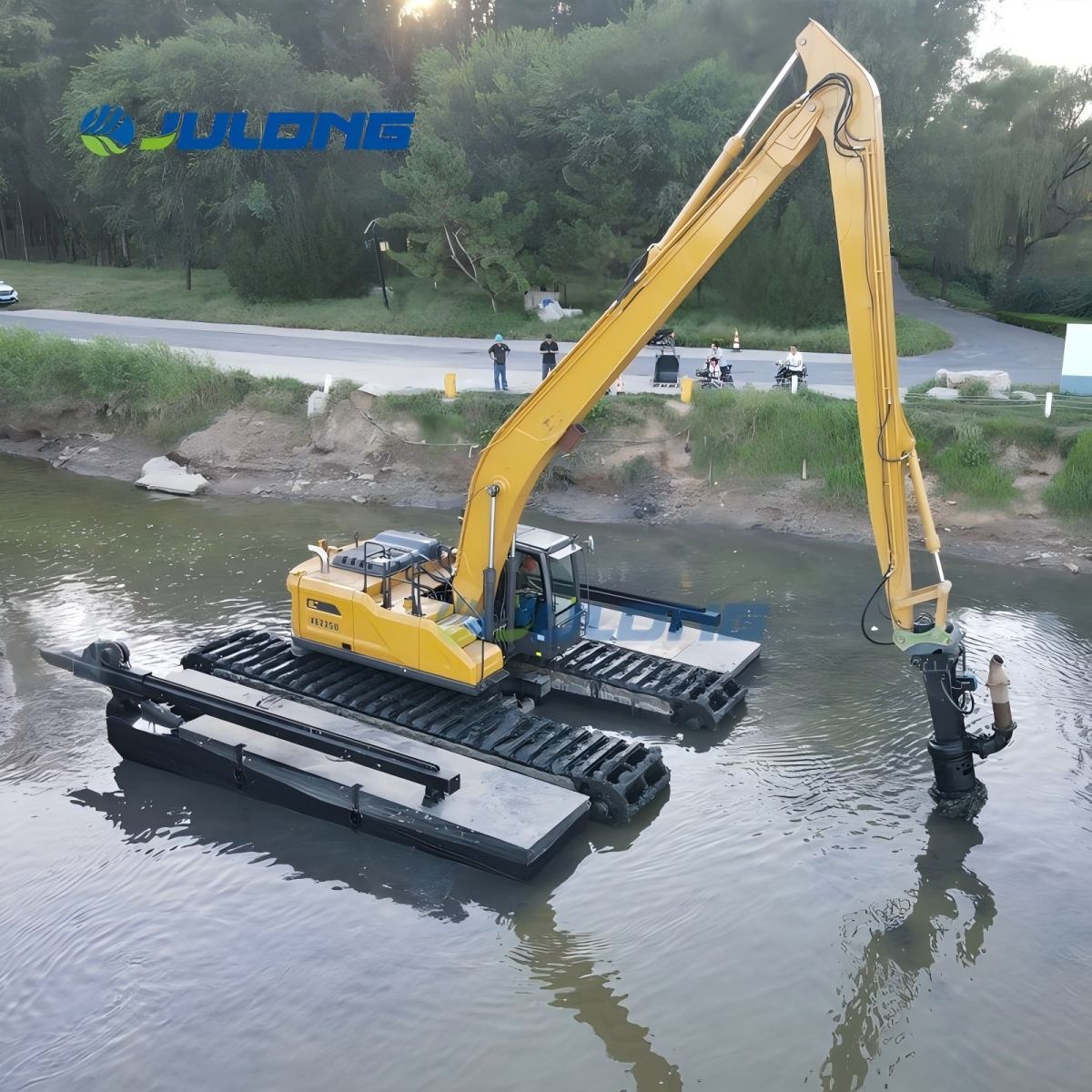
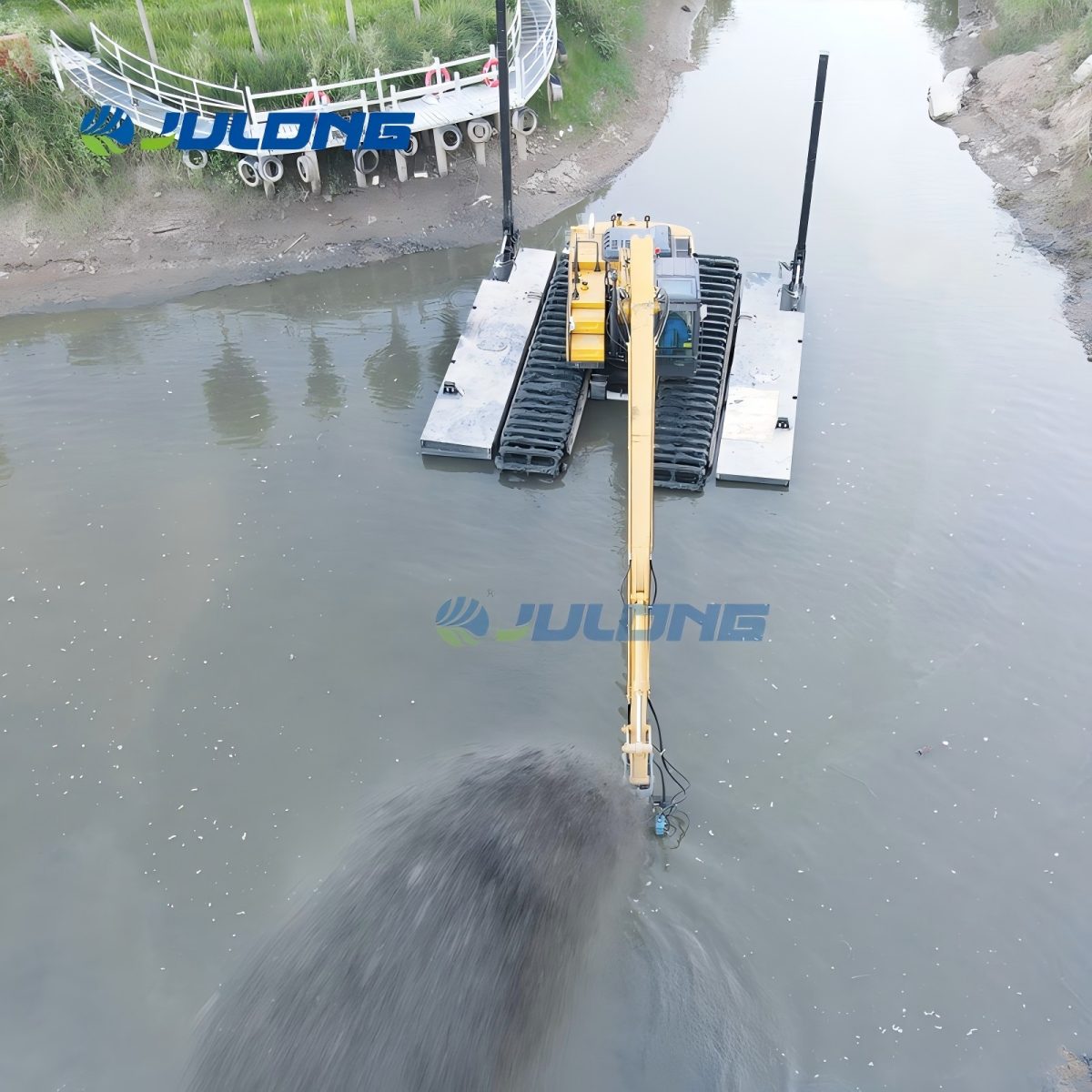
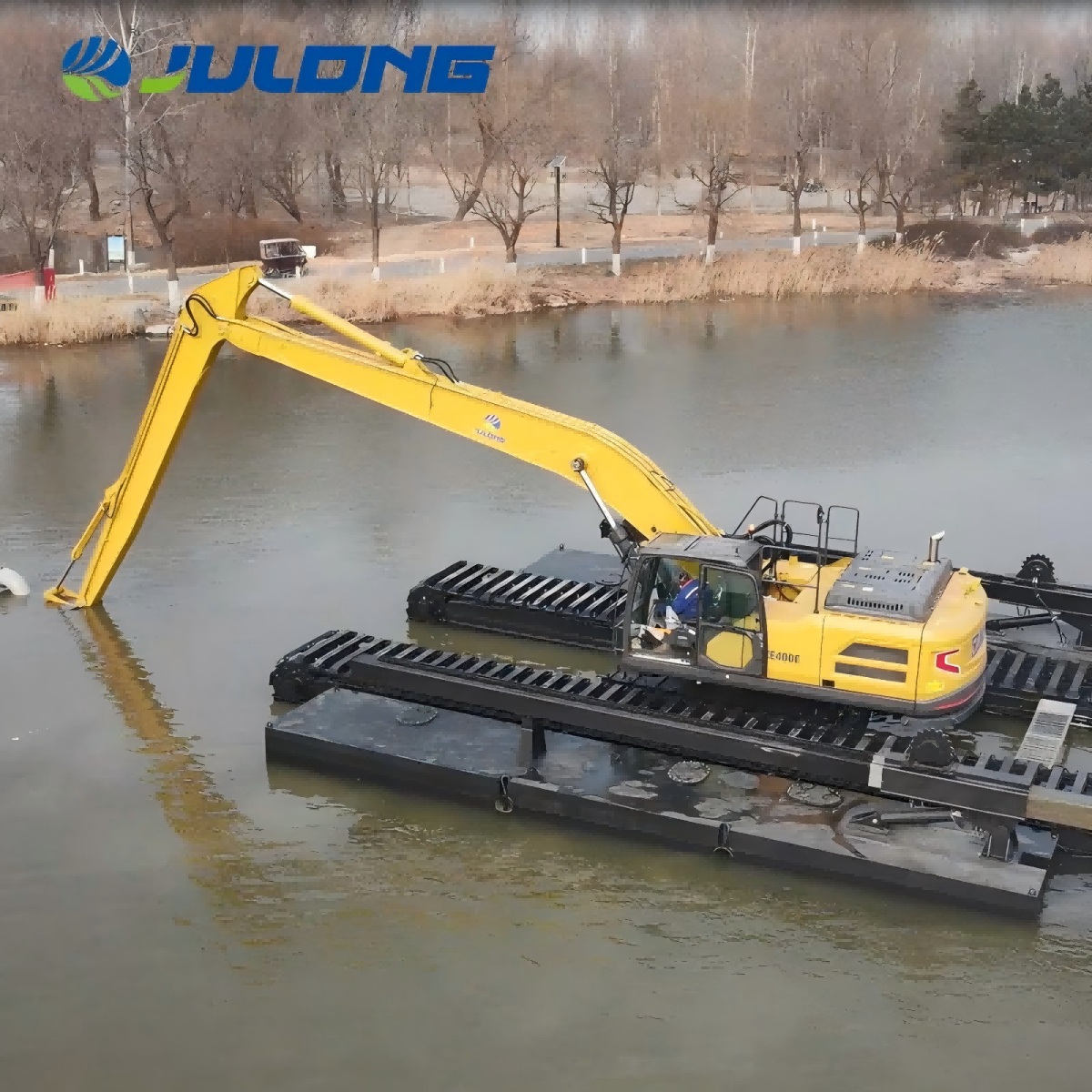
Common Problems with Floating Backhoes and Their Solutions
While floating backhoes are designed for durability and efficiency, they may encounter several common issues during operation. Here are some problems and suggested solutions:
Hydraulic System Failures: Hydraulic system failures can severely impact performance. Regular maintenance and inspections should be conducted to check for leaks or worn components. Operators should be trained to identify warning signs and address issues promptly.
Stability Issues: Tipping or instability can occur, especially in deeper waters or during adverse weather conditions. It’s essential to adhere to the manufacturer's weight limits and ensure the backhoe is properly anchored to maintain stability.
Corrosion and Wear: Floating backhoes are exposed to harsh aquatic environments, leading to corrosion over time. Using high-quality coatings and conducting regular inspections can help mitigate this issue. Schedule timely maintenance and repairs to extend the equipment's lifespan.
Operational Inefficiencies: If the backhoe is not performing as expected, it may be due to improper settings or operator error. Regular training and familiarization with the equipment can help optimize performance and reduce downtime.
Debris Blockage: Accumulation of debris around the boom or arm can hinder operation. Regular cleaning and maintenance can prevent this issue and ensure smooth functionality.
By being aware of these potential problems and implementing proactive measures, you can enhance the reliability and efficiency of your floating backhoe operations.
In summary, understanding the specifications, supplier options, application scenarios, installation requirements, and common problems associated with floating backhoes will empower you to make informed decisions that align with your project goals.
 EN