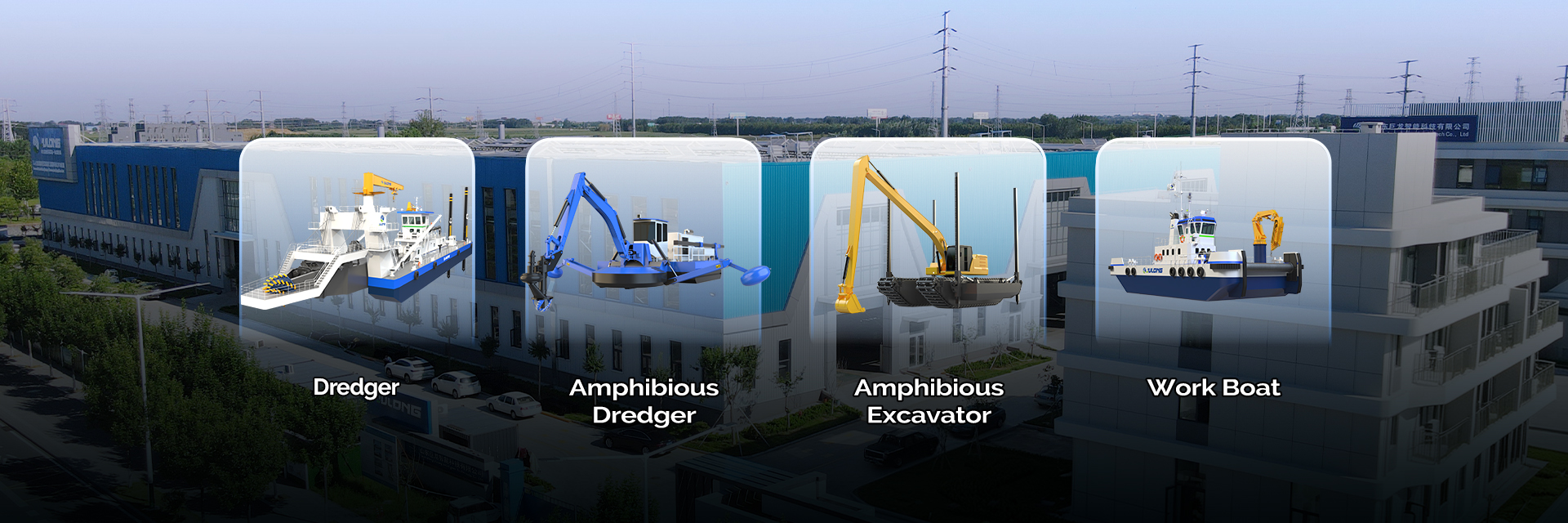
EN
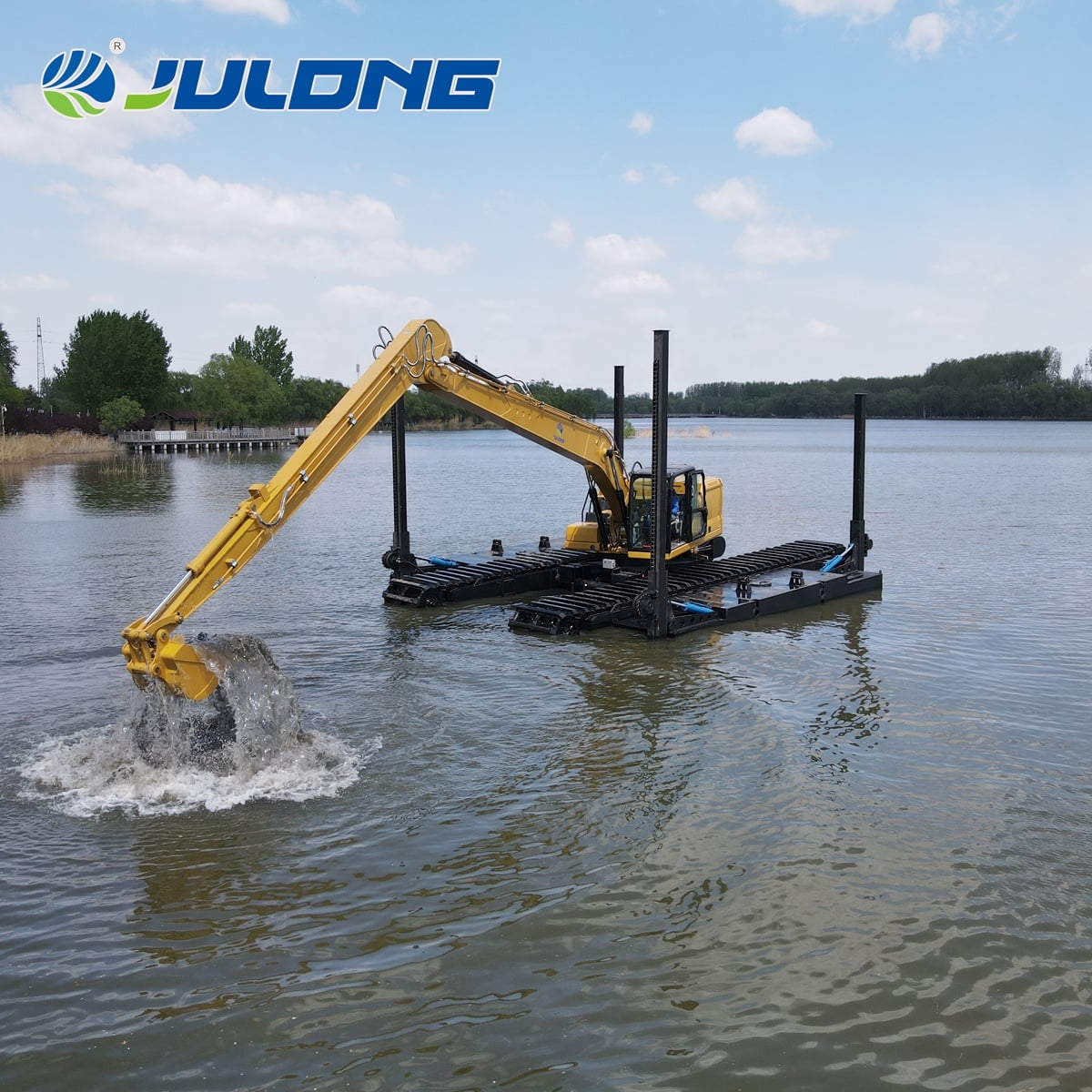
The JLAME30T is a 30-ton class amphibious excavator built for jobs that ordinary excavators can't reach — shallow rivers, muddy lake beds, marshland, and coastal tidal flats. Instead of building a cofferdam and waiting for dry ground, this machine walks straight into the water and starts digging. The secret is a pair of sealed steel pontoons that replace the standard track frame, giving the excavator enough buoyancy to float while the wide tracks propel it through mud and water.
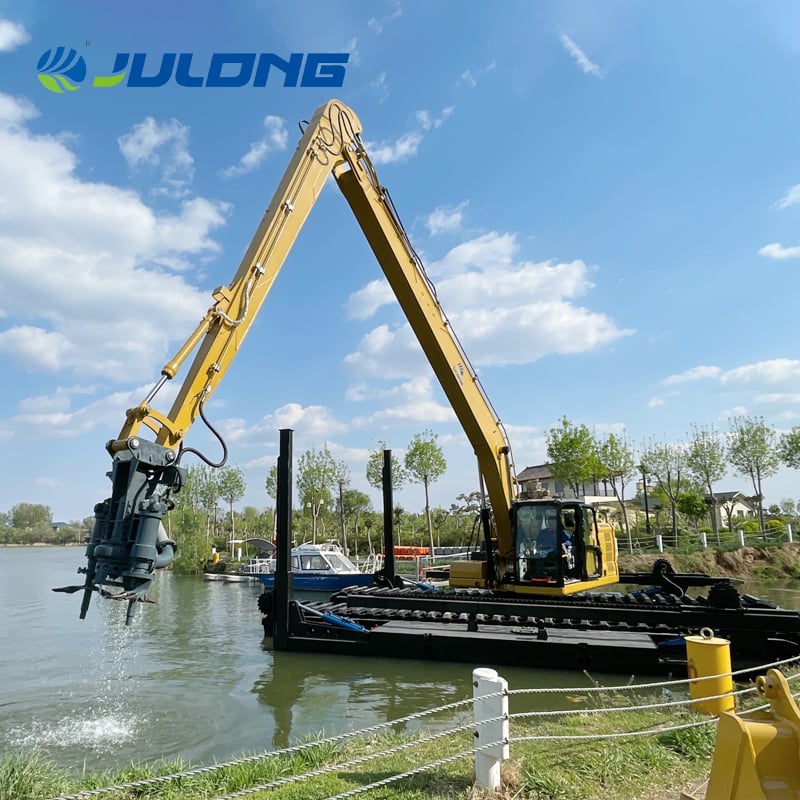
20 Ton amphibious excavator designed for swamp, wetland, river dredging and marsh construction. Reliable floating excavator manufacturer providing customized amphibious machines worldwide.
With extensive experience in dredging and amphibious equipment manufacturing, our company provides professional, cost-effective, and customized solutions for projects worldwide. Supported by an experienced engineering and design team, we can develop equipment configurations according to different working conditions, including required dredging depth, terrain, working attachments, and project requirements.
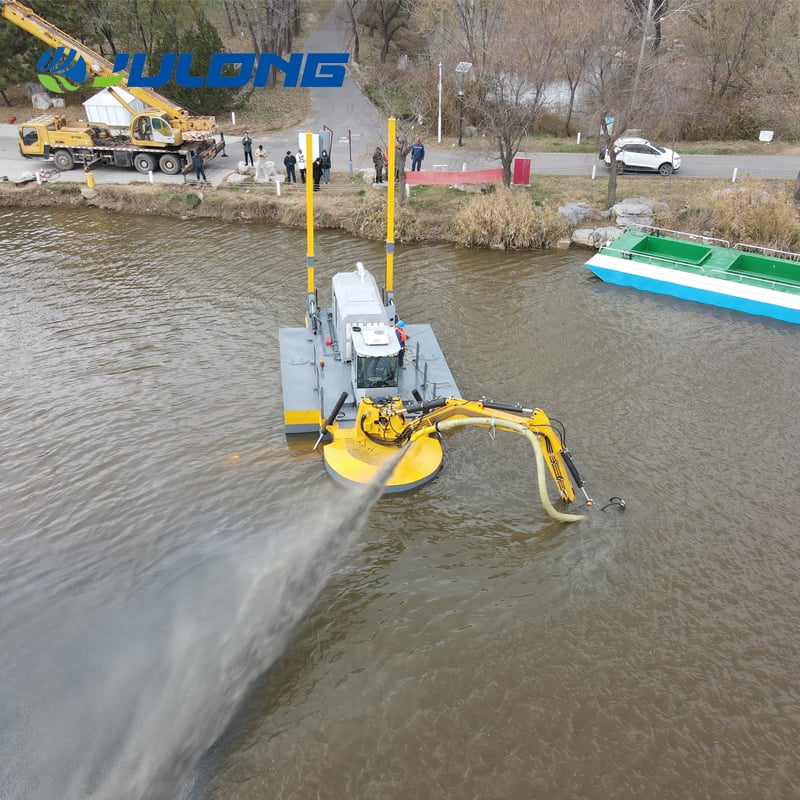
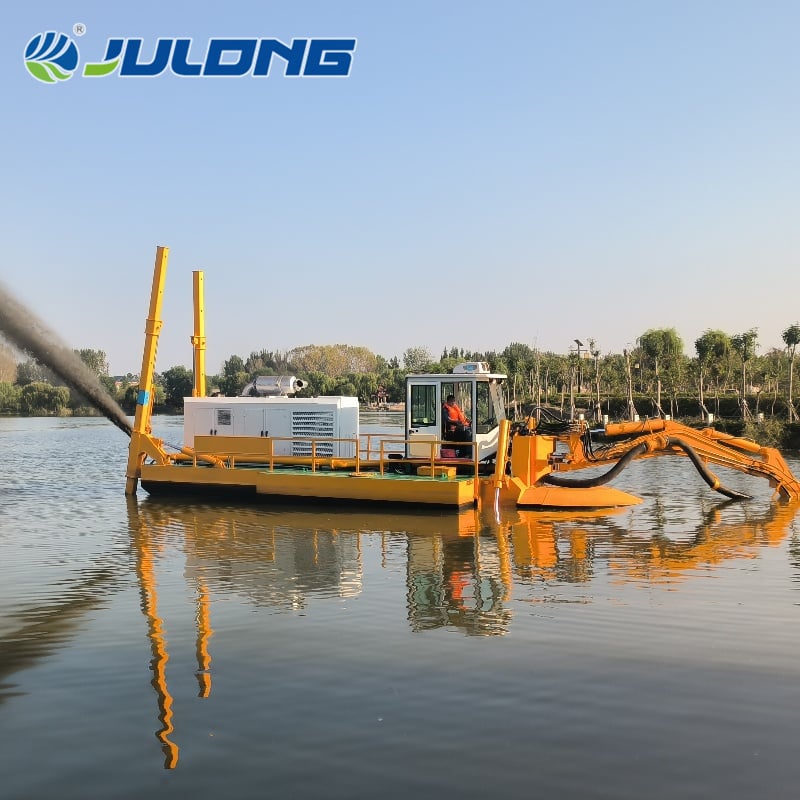
Amphibious Multi-Purpose dredger is pontoons mounted machine. It is a combination of a dredging machine with backhoe bucket and a suction dredger.
Amphibious Equipment is designed to provide reliable mobility and working capability in environments where conventional excavators and construction machinery have difficulty operating. By combining the working functions of an excavator with an amphibious undercarriage, this equipment can operate on soft ground, wetlands, mudflats, shallow water, marshes, riverbanks, ponds and other difficult terrains.
Unlike standard excavators that are mainly designed for firm ground, amphibious equipment uses a specially designed floating undercarriage with extended pontoons and crawler systems. The wide and stable structure helps distribute the machine's weight over a larger contact area, reducing ground pressure and improving stability on soft or unstable surfaces. This makes it suitable for projects where access, flotation and low ground pressure are important considerations.
One of the main advantages of amphibious equipment is its ability to work in areas with poor ground bearing capacity. Conventional construction equipment can easily become stuck in deep mud, swampy areas or saturated soil. Amphibious equipment is designed specifically for these challenging conditions.
The floating pontoons provide additional buoyancy, while the crawler propulsion system allows the machine to move across mud, shallow water and soft terrain. Depending on the configuration and working environment, the equipment can be used for excavation, dredging, vegetation removal, slope maintenance, sediment management and other earthmoving applications.
Its combination of flotation and tracked mobility provides greater flexibility for projects located between land and water.
The amphibious undercarriage can be combined with a suitable excavator upper structure, allowing customers to configure the equipment according to their specific application. Different excavator sizes, hydraulic systems and working attachments can be selected depending on the required digging depth, working reach, material type and operating environment.
Common attachments may include buckets, dredging pumps, cutter heads, grabs, hydraulic breakers, rakes, weed-cutting systems and other specialized tools.
This modular approach allows one amphibious machine to perform different types of work without requiring completely different equipment for every project.
Amphibious equipment can be used across a wide range of industries and environmental conditions.
Wetlands and marshes often have extremely soft soil and limited access for conventional machinery. Amphibious equipment can provide a practical solution for excavation, channel maintenance, embankment work and environmental management.
With appropriate dredging attachments or pumps, amphibious excavators can be used for shallow-water dredging, pond cleaning, canal maintenance, sediment removal and waterway rehabilitation.
The equipment is particularly useful where water depth is too shallow for a conventional dredger but too soft or unstable for a standard excavator.
Riverbanks, drainage channels and canals often contain a combination of water, mud and soft soil. Amphibious equipment can access these areas while carrying out excavation, desilting, bank maintenance and vegetation removal.
Amphibious platforms can be equipped with specialized cutting or collection attachments for removing aquatic weeds, reeds, invasive vegetation and other plant growth from shallow-water environments.
During flood-control and drainage projects, access conditions can be difficult because of saturated soil and standing water. Amphibious equipment can assist with channel excavation, drainage improvement, sediment removal and maintenance of flood-control infrastructure.
The equipment can also be used for wetland restoration, waterway rehabilitation, habitat improvement and sediment management projects where minimizing ground disturbance is important.
A key feature of amphibious equipment is its low ground pressure. The wide floating undercarriage distributes the machine's weight over a larger area than conventional crawler excavators.
This reduces the risk of sinking into soft soil and allows the machine to operate in areas that may otherwise require temporary access roads, working platforms or additional ground-support measures.
The wide pontoon configuration also provides a stable working platform when operating close to or within shallow water.
Amphibious equipment can be configured according to different project requirements. Customers can select the appropriate excavator size, pontoon dimensions, hydraulic configuration and working attachments based on the intended application.
For projects requiring deeper excavation or longer working reach, specialized boom and arm configurations can be considered. For dredging applications, hydraulic dredging pumps and pipeline systems can be integrated into the working configuration.
This flexibility allows the same basic amphibious platform to support multiple applications throughout its service life.
One of the biggest advantages of amphibious equipment is its ability to work across changing terrain. A project may involve solid ground, soft mud, shallow water and wetland areas within the same working zone.
Instead of using separate machines for different terrain conditions, an amphibious platform can provide a continuous working solution across these transition areas.
This can be particularly useful for contractors involved in dredging, waterway maintenance, environmental projects, flood control and wetland construction.
Amphibious equipment is designed with practical field operation in mind. The undercarriage, pontoons, crawler system and hydraulic components are engineered to work together as an integrated platform.
For international projects, configuration can be adapted according to local working conditions, including water depth, soil characteristics, excavation requirements, transportation conditions and available excavator models.
Proper equipment selection should always be based on the actual site conditions and required operating parameters.
Amphibious equipment provides a combination of mobility, flotation, low ground pressure and excavating capability for challenging environments.
Its main advantages include:
Operation on soft and unstable ground
Capability for shallow-water applications
Low ground pressure
Improved stability on wetlands and mud
Flexible excavator and attachment configurations
Suitable for dredging and excavation
Useful for river, canal and pond maintenance
Adaptable to environmental and restoration projects
Reduced dependence on temporary working platforms
Suitable for land-to-water transition areas
From wetland excavation to shallow-water dredging, amphibious equipment provides a versatile platform for projects where conventional machinery cannot easily reach or operate efficiently.
When selecting an amphibious machine, factors such as excavator operating weight, maximum digging depth, working radius, water depth, ground conditions, pontoon dimensions, attachment type and required productivity should be carefully evaluated.
With the right configuration, amphibious equipment can become a multifunctional working platform for dredging, excavation, wetland management, waterway maintenance, environmental restoration and other challenging-terrain applications.


 EN